I knew that absence was becoming a miserable presence in mylife and that I’d have to occupy myself at weekends when everybody else went home to Bordeaux and elsewhere.
I’d befriended Thierry, one of the local extras, and he offered to show me round the Camargue on my days off.
He explained that the Camarguais are frontiersmen, tough cattle breeders and fantastic horsemen.
I’d learnt to ride at Carberry Towers just outside Musselburgh,so that wasn’t a problem when Thierry offered me one of his wonderful white stallions to carry me round the Camargue.
What a thrill, riding one of the oldest breeds in the world; galloping through the saline marches with dazzling back–lit water erupting all around. Or helping to round up the semi-feral black long horn bulls as they thundered across the vast lonely beaches.
The bullfighting here is not of the kind where the Matador eventually kills the bull, but none the less just as skillful and dangerous. The Matador must remove a red ribbon tied round the charging bull’s horn.
The following weekend Thierry and I trailed one of France’smost famous post–impressionists.
During his time in the Camargue, Van Gogh produced some of his finest paintings, ‘The Night Café’ ‘Sunflowers’ and ‘L’Arlesienne’ between Feb.1888 and May 1889.
His letters to his brother Theo reveal the internal mental struggles he was having with his imagination. They also reveal Van Gogh’s unique interpretation of the Camargue’s natural colors, leading to his fellow artist Paul Cezanne’s comment ‘you paint like a madman.’
Paul Gauguin also visited, but by that time, Van Gogh had become alarmingly acentric, culminating in his ear severing incident.
In late May 1888 van Gogh visited the small fishing villageon the Mediterranean coast ‘Saints–Maries–de-la-Mer.’ This isalso where I was staying for the duration of the filming. Here he creates several wonderful pictures of this beautiful area, describing the color of the sea as ‘like a Mackerel’.
The Mistral that sometimes howls through the wetland reedsmay have contributed to his depression.
Certainly, the unprecedented magnetism of Van Gogh’smasterpieces, known for their emotional depth and power of creativity, along with his understanding of nature and complexities of the human spirit – now sell for many millions.
This was a very special place and I was priviledged to be at the center of a profound and enriching cultural experience,created by van Gogh and others, along with the Gypsy pilgrimage to Saints-Maries-de-la-Mer.
Later Dan Brown’s, The Da Vinci Code, would also attract numerous followers to the same area.
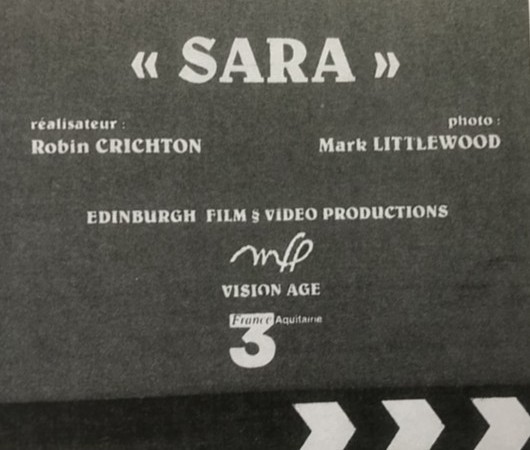
In ’SARA’(Blog 3) I will detail the Gypsie’s Pilgrimage in ‘Saintes-Marias-de-la-Mer and how ‘SARA’ the film developed
‘SARA’ is in my book “Shaping the Shadows: A Picture Maker’s Story” along with many others and is on sale from The National Library of Scotland for £10.00,
Also available from:
marklittlewood.org.uk
Amazon.
#camargue #VincentvanGogh #NationalLibraryofScotland#PaulCezanne
#ShapingtheShadowsAPictureMakersStory #FrenchCulture.