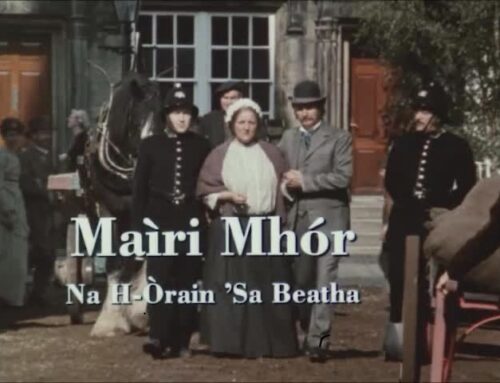
“….my room door burst open and three armed men ransacked my lodgings and dragged me to the waiting Tumbril – an open cart for transporting condemned prisoners to the guillotine during the French Revolution. Seven charges were fabricated against me – my life is in grave danger” reported Ethel to the Sunday Mail: Oct. 1937.
Great Conflicts produce great people; Ethel MacDonald’s impassioned radio broadcasts represented the fulfilment of her longing to ‘serve the struggle’ wrote The Glasgow Herald.
Her voice was now becoming famous round the world, even inHollywood, California, but was less known in her hometown ofBellshill, Lanarkshire. Ethel left there at the age of twenty-seven, to go and fight in one of the bloodiest conflicts of all time. The Spanish Civil War.
Many of the British volunteers killed in the ‘International Brigades’during this war, were Glaswegians. It was a time of economic depression, hunger marches and the rise of fascism. Franco was supported by the fascist regimes of Hitler and Mussolini, against the left-wing republicans, supported by the International Brigades, Soviet Russia and U.S.A.
Because of her reports back to the Scottish press, Ethel was accused of spying, which placed her in mortal danger. Blacklisted by the Spanish authorities and under constant surveillance from Stalin’s secret police, she became known as the ’Scots Scarlet Pimpernel’
.“… I was sitting in a café and a face that seemed strangely familiar,asked me if I was Ethel MacDonald. As I said ‘yes’ I suddenly recognised him as one of the men who had arrested me”. Reported Ethel to the Evening Times: 27th. Sept. 1937.
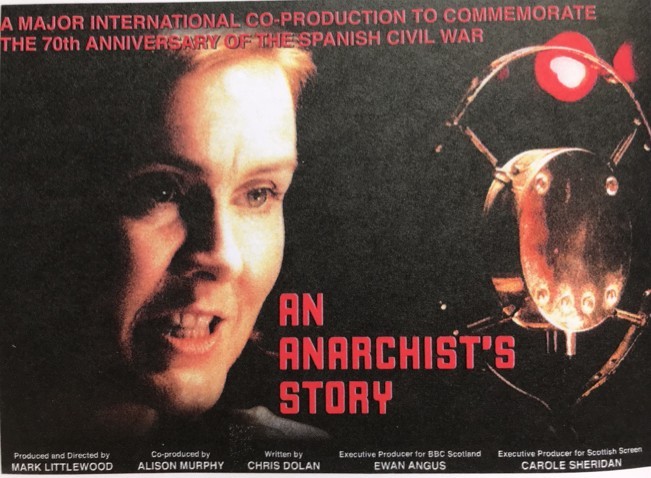
Ethel’s story ranks with those of other war heroines, such as La Pasionaria and Odette. It was discovered by Scottish Screen’s FactualTrainee, Alison Murphy, whilst researching for my George Orwell filmin Glasgow’s Mitchell Library.
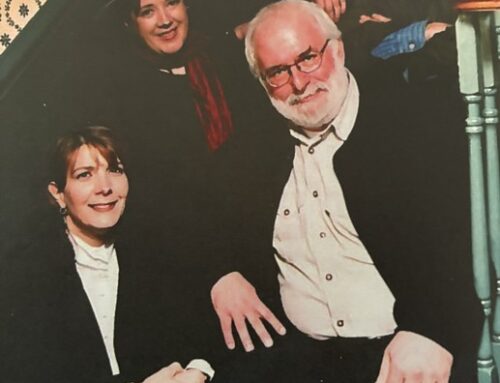
Alison had started working with me on ‘Orwell: Against the Tide’ while completing her internship under the guidance of Kay Sheridan, Scottish Screen’s New Entrants administrator. She then went on to co-produce ‘An Anarchist’s Story.’
Another essential was the multi-talented author Chris Dolan, who subsequently wrote the book and from whom many ideas came. Finally,Andy Boyd, ‘my great redeemer’ and ever-present editor completed theteam.
Before I continue further with Ethel, I’d like to tell you how this film came about in my first blog and more about how it was made in my second.
Following the success of ‘Orwell – Against the Tide’ the European Commission’s department of ‘Education and Culture’ awarded us development funding for another three major international co-productions, all feature drama/documentaries. The only slate funding they commissioned that year.
So, we had development funding, but no production funding. Once again, I began my trek round Europe with my begging bowl. Jordi Ambrose, true to his word, returned with TV Catalunya, as did the ‘Institute Catala des les Industries Culturals’, along with our knew Spanish co-producer, La Productora, Scottish Screen, BBC and STV.
Follow this story in my 2nd. blog and in my book, Shaping the Shadows: A Picture Maker’s Story, along with many others. Available from the National Library of Scotland at a special student price of £10.00 Also available from marklittlewood.org.uk and Amazon.
#ScottishScreen #ChrisDolan #OrwellAgainsttheTide #ShapingingTheShadows.