Dead babies lying randomly like rag dolls, beside the mutilated bodies of their dead parents. Rows of men lined up against a wall and shot.
B/W archive footage shot by the news war cameramen, was by far the most compelling way to show these Spanish Civil War atrocities (1936-1939)
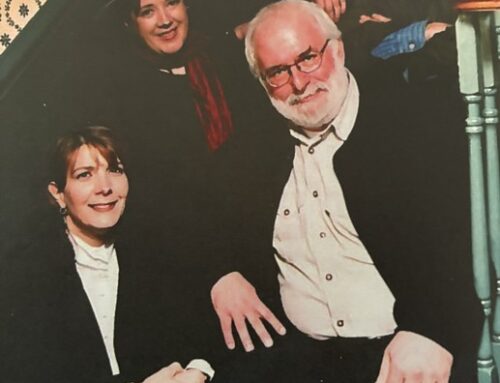
Making the Ethel MacDonald film was a real challenge for me because I was unsure how to use my own visual interpretation of this complex story. My films rely heavily on “Every Picture tells A Story” But I wasn’t very good at carnage; so, without Alison, Chris and Andy I would have found it even more difficult .
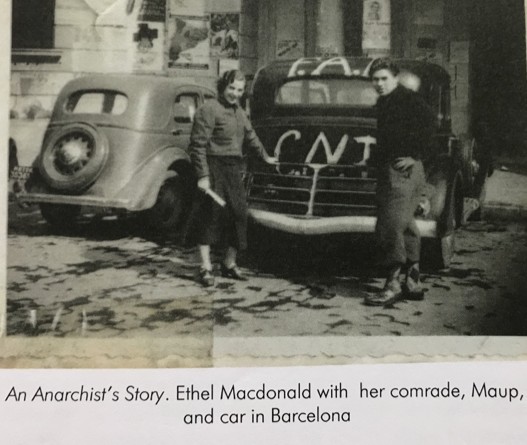
There were numerous sets of initials representing differentfactions, even on the same side. But I wasn’t the only confused one. George Orwell, unlike all the otherinternational, volunteers joined the P.O.U.M., instead of the ‘International Brigades’ – Noam Chomsky thought this unique. The difference between two sets of initials could mean life or death.
Chris’s writing and Spanish experiences helped:
‘Although period by nature the film should capture the fresh and quirky look, reflecting the youthfulness and vivacious of its central character – further emulating the style and tone of 1930’s Spain. This look would be helped by following Ethel’s journey from the cold Scottish industrial landscape to the heat and colour of the Spanish Mediterranean – and to the distinct idiosyncratic character of Barcelona itself. The compelling colour of Ethel’s new world will be enhanced even further by revolutionary artwork and propaganda in the overall flavor of the mix/confusion of the Spanish Civil War. This will be balanced by gripping archive film – never shown on screen before – and stills providing testimony to our heroine’s activity. The definitive blend of slow Catalan melodies, protest and anarcho-punk musical styles will provide an exhilarating soundtrack to the film, enhancing the dualism of gritty documentary and emotive drama’.
Earlier BBC Scotland had re-entered the funding fray with additional finance; this was to be their flag ship programme to commemorate the 70th anniversary of the Spanish Civil War. Once again, I was tasked with making two versions: one for BBC Scotland, the other for Scottish Screen.
I think we were very successful in telling Ethel’s story, but I’m still haunted by that bloody violence, indiscriminate killing and the great tragedies that unfolded.
Both our international co-productions; the multi-award winning “Orwell: Against the Tide” and “An Anarchist Story”were conceived in Scotland, had their gestation period in Scotland and were produced in Scotland.
I firmly believe the soul can be anchored in the power of hope and optimism when combined with hard work and resilience; remember, talent is 99% graft.
‘An Anarchist’s Story’ is in my book, “Shaping the Shadows: A Picture Maker’s Story”
along with many others and is available from the National Library of Scotland at the special student rate of £10.
Also available from marklittlewood.org.uk
Amazon
#ChrisDolan #NationallibraryofScotland #ShapingtheShadowsApicturemakersstory#SpanishCivilWar